
Electrical engineer
.png)

An electrical engineer can determine the success of an entire industrial project with a single choice of electronic component. In a sector where electrification impacts everything from automotive and aeronautics to energy, this technical role involves projects that are as varied as they are critical, often with very little room for error.
What is the role of an electrical engineer?
The role of an electrical engineer is to design and build safe, high-performance, and energy-efficient electrical systems, from translating client requirements to commissioning and operational monitoring. They are involved at every stage of the system's lifecycle, from initial calculations to troubleshooting once the installation is in service.
What are their day-to-day responsibilities?
The daily routine is organized around several phases, from design to operation, with a balance between calculation work and field presence that varies significantly depending on the project and the sector.
Studies and design
Everything begins with defining the system architecture based on required power, expected efficiency, and safety constraints. The engineer performs electrical and thermal sizing, calculates cable cross-sections to ensure acceptable voltage drops, and selects electronic components based on their operating curves and electromagnetic compatibility. This phase requires as much calculation as it does trade-off decisions between performance, cost, and component availability.
Development and simulation
Before any manufacturing takes place, design choices are verified through simulation, particularly using SPICE or Simulink, for the most critical scenarios. The engineer often relies on Python or C scripts to automate post-processing of results and accelerate iterations. This step allows for correcting discrepancies between the theoretical model and real-world behavior before the first physical test.
Integration and commissioning
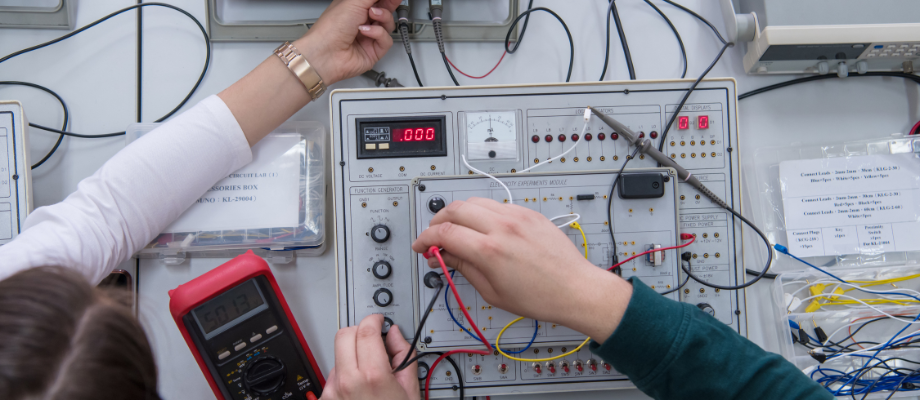
The system is then connected to industrial networks and configured within SCADA-type supervision tools. The engineer documents every test and version in a traceability database. This phase requires close coordination with production teams, who will be responsible for operating the system once commissioning is complete.
Validation
A test plan covers the system's functional and environmental requirements. Whether in the lab or on-site, the engineer verifies thermal performance, electrical safety, and electromagnetic compatibility. The resulting compliance file is often a prerequisite for moving into the operational phase.
Operation and maintenance
Once the system is in service, the focus shifts to rapid diagnostics in the event of a breakdown and preventive maintenance. Data collected in the field feeds into continuous improvement plans, with the goal of reducing recurring failures and extending the equipment's lifespan.
Beyond these technical phases, the electrical engineer works in constant contact with project managers, production teams, and the quality and purchasing departments. Externally, they communicate with suppliers, testing laboratories, and sometimes end clients to incorporate their usage constraints.
What skills are required for this profession?
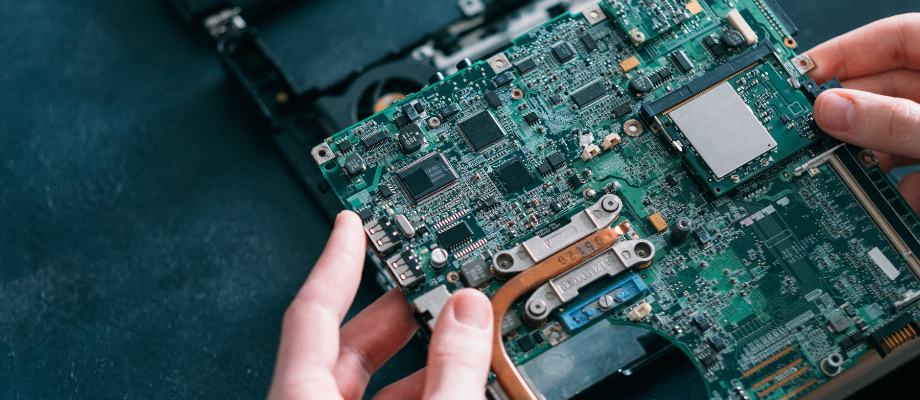
The technical foundation is built on the fundamentals of electrical engineering: energy conversion, installation protection, selectivity, conductor sizing, power electronics including rectifiers, inverters, and choppers, component selection such as IGBTs, MOSFETs, or SiC and GaN technologies, electromagnetic compatibility filters, and signal processing.
Mastery of systems and networks rounds out this foundation. The engineer must know how to integrate an industrial network, whether it be Ethernet/IP, Profinet, or Modbus, while ensuring architectural security. Database structuring and proficiency in industrial computing tools, combined with simulation software like SPICE or Matlab, complete this technical profile.
Programming is primarily used to automate measurements and analysis on test benches. Regarding quality, FMEA, validation plans, and rigorous documentation—often bilingual—are expected from the very first projects.
Personal qualities matter just as much. Solid scientific rigor allows you to analyze a situation and justify a technical choice to a client or team. Listening to needs and the ability to prioritize make all the difference when deadlines tighten. Technological curiosity remains invaluable in a field where knowledge evolves rapidly.
How do you become an electrical engineer?
The most common path is a five-year engineering degree from a higher education institution specializing in electrical engineering, electrotechnics, or industrial computing. This curriculum provides a high level of expertise in applied sciences and project management—skills that are put to use from your very first job.
A university master's degree with a specialization in electrical engineering, electrical systems, or automation is another recognized path. Other routes include a two-year technical degree in electrical engineering and industrial computing, a bachelor's degree in electronics or energy, or a preparatory class followed by an engineering school. An internship or work-study program at the end of your training facilitates entry into the job market, particularly in companies organized around multi-sector projects.
It is not just the electrical engineering specialization that counts: some employers also value dual expertise in IT or automation, which is useful for quickly adapting to new technical environments.
What is the salary of an electrical engineer?
Many factors influence compensation: the sector, the scope of the role, company size, location, and rare skill sets. Below are salary ranges from Apec for an electrical engineer (M/F) with a five-year engineering degree, working in a consulting firm with 599 to 1,000 employees in the Île-de-France region in 2025.
- Junior (less than 4 years of experience): €37k to €46.6k gross per year.
- Mid-level (6 to 8 years): €38.5k to €49.3k gross per year.
- Senior (9 to 16 years): €43.8k to €57.2k gross per year.
These figures are for guidance only. For an estimate tailored to your profile, check out our job openings and speak directly with our teams.
What are the career prospects for an electrical engineer?
After a few years of experience, several paths open up depending on the skills you have developed. In terms of expertise, engineers can specialize in power electronics or industrial networks, moving into roles such as technical lead or power electronics expert.
In terms of project management, career progression can lead to roles like R&D project manager or design office manager, involving direct oversight of costs, deadlines, and quality, along with constant interaction with the client. Other profiles transition into industrial quality or electrical safety, areas where experience often counts more than the original degree. With several years of seniority, some move into management positions at a production site or in technical management, or even business management for the most experienced profiles. These transitions depend primarily on the type of projects handled and individual preference for management versus pure technical expertise.
The role of an electrical engineer is for you if...
You enjoy turning a vague requirement into a concrete technical solution, balancing constraints of power, cost, and safety. You aren't afraid of calculations, but you don't stop there: verifying a simulation, commissioning an installation, or diagnosing a breakdown on-site are all part of the same job.
You are comfortable moving between a highly regulated environment with strict quality requirements and more direct interactions with a production team or a client. This is not a common profile, but if the diversity of sectors and projects attracts you rather than distracts you, this profession is very likely a good fit for you.
Are you looking for a new opportunity as an electrical engineer? Discover the job openings at IT Link Group and build your professional future with us!
FAQ
An electrical engineer primarily works on electrical installations and their compliance, particularly in buildings. An electrotechnical engineer covers a broader scope, including power electronics, automation, and the integration of complete industrial systems. Both roles share a common foundation in electricity, but electrotechnics adds a more advanced system and computing dimension.
Electrotechnics spans a wide variety of fields, which explains the diversity of projects entrusted to the Linkers working in this role. In the automotive industry, the transition to electric vehicles is increasing the need for design work on powertrains and power electronics. In aeronautics, the widespread adoption of more-electric aircraft systems requires precise expertise in power distribution. Energy remains a core sector, encompassing production, distribution networks, and the integration of renewable energy into existing facilities. Telecommunications relies on these skills to power infrastructure where service continuity is critical. Meanwhile, the industrial sector calls upon electrotechnical engineers for automation and supervision projects, working alongside automation engineers on control loops. This diversity explains why the profession attracts candidates with varied backgrounds, some coming from pure electrical engineering, others from electronics or industrial computing.

Unsolicited application
Are there currently no offers that match your profile? Share your spontaneous application with us!



.png)