
Test Bench Engineer

I - What is a test bench engineer?
What is the role of a test bench engineer?
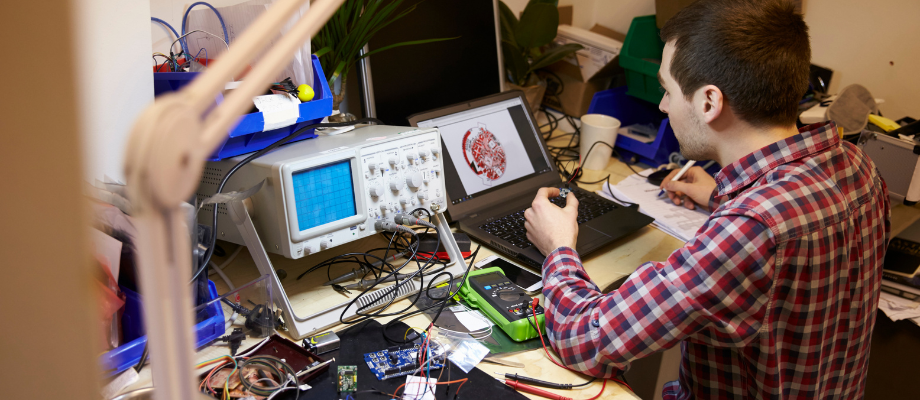
During the development of a product, the test bench engineer is responsible for verifying that everything works. To do this, he designs and sets up test benches that will make it possible to verify the behavior of systems, whether electronic or software, before they are put into production.
From these benches, it measures performance, analyzes results and identifies possible anomalies. The data collected is used to confirm the reliability, performance and safety of the product, but also to guide improvements to be made.
Present from the first phases of study and development, he imagines new test approaches, whether hardware or software. Its analysis and adjustment work is part of the continuity of research, design and technical validation.
In an environment where embedded systems and connected products are ever more numerous, the test bench engineer contributes to guaranteeing the quality and reliability of the technologies used on a daily basis. It ensures that information flows correctly and that industrial standards are respected.
What are the missions of a test bench engineer?
The missions of a test bench engineer are varied: between design, validation and analysis, he spends his time alternating theory and field. Its main missions are:
- Design and develop electronic and software test benches adapted to the needs of the project.
- Verify product performance using specific protocols.
- Detect anomalies, interpret test data and suggest ways to improve.
- Use specialized tools such as LabVIEW, TestStand, or other hardware platforms to automate tests.
- Respect quality standards and best practices in the sector.
- Collaborate with design, development, and validation teams.
- Write clear test reports and share results with project teams.
Who are its main interlocutors?
The test bench engineer evolves in a very collaborative environment where his interlocutors are multiple:
- System, software, or electronics engineers;
- Quality, production or industrialization teams;
- Not to mention customers and suppliers.
II - What are the skills and qualities required to do this job?
As with every job, technical skills alone are no longer enough. It is also necessary to have soft skills. Let's discover together the skills and soft skills essential for this job:
Technical skills
A good test bench engineer is above all someone who masters his tools. LabVIEW, TestStand or other automation environments have no secrets for him: he knows how to use them to design, execute, and make tests reliable. He understands both hardware and software, and knows the basics of embedded systems. This dual culture allows it to have a global vision and to intervene where necessary, without losing sight of the whole system. Finding a failure, understanding an anomaly, analyzing complex results: all this is part of his daily life. You have to enjoy diving into data to make sense of it. Development skills (Python, C/C++, Matlab...) are also a real plus, whether it is to write a script, adapt a test tool or improve an existing bench. Experience in the design and integration of test benches is essential: define the need, design the hardware, validate the functionalities and ensure the commissioning. And as requirements change from sector to sector, a good knowledge of standards and validation processes (aeronautics, automotive, defense, etc.) is often necessary. Finally, you have to be comfortable with data tracking tools and managing technical information because a well-done test is useless if it is not well traced.
Softs Skills
It is a job that requires rigor and real respect for procedures, but not only that. You also have to know how to analyze, research, test, and sometimes start again several times before finding the cause of a problem. The test bench engineer rarely works alone: he constantly exchanges with the systems, software, production or quality teams. Listening and knowing how to communicate clearly makes all the difference. You also need to have this ability to take a step back: not to be limited to one component, but to understand how each element interacts in the overall system. And then, you need a bit of patience and perseverance. Reproducing an anomaly, dissecting strange behavior, this can take time, but it's also what makes the job stimulating!

III — How to become a test bench engineer?
What studies are recommended?
To access this profession, you generally need an engineering degree (Bac +5) in electronics, embedded systems, industrial computing or mechatronics. Beyond the degree, what really matters is a solid scientific base. Understanding the behavior of an electronic system, embedded software or a measurement chain is essential to design a reliable, relevant and scalable test bench. A marked technical curiosity and a taste for experimentation also make the difference: many test bench engineers come from a variety of backgrounds, but all share the same reflex of wanting to understand how and why a system reacts.
IV — What are the prospects for development? What remuneration?
Development perspectives
With experience, a test bench engineer sees many doors open. Depending on his desires and his profile, he can evolve towards the management of validation projects or take the responsibility of a team, by managing the organization of tests and technical coordination.
Others choose a more technical path and become experts or test architects. It is also possible to move towards positions of quality manager, product development engineer, or to join design, industrialization or system integration activities.
The opportunities are numerous: aeronautics, automotive, energy, energy, defense, defense, defense, telecommunications, embedded technologies... All these sectors are looking for profiles capable of combining rigor, system understanding and practical spirit.
Some engineers finally choose to specialize more, for example in hardware design, software validation or even data analysis applied to testing. This targeted expertise often allows them to become a technical reference within their company.
Remuneration
Many factors come into play (missions, sector, scope, size of the company, location, etc.). To give you an idea of remuneration, here are the ranges from Apec according to the following parameters: Test bench engineer M/F, Bac+5 (engineering school), consulting firm with 599 to 1,000 employees, Île-de-France in 2025.
- Junior (< 4 years of experience): 3.7 to 44.5 thousand euros gross/year
- Confirmed (6—8 years): 37 to 46.6 million euros gross/year
- Senior (9—16 years): 41.3 to 52.9 k€ gross/year
For a more accurate estimate, adapted to your profile and our missions, we invite you to consult our job offers.
Conclusion
The job of test bench engineer seduces by its balance between analysis, technology and innovation. It requires rigor, real curiosity and a taste for a job well done. It is a field and reflective role, where each test contributes to improving the quality and reliability of tomorrow's products.
If you love to understand, check, and improve systems, this is the job for you!
Discover our job offers and talk to our recruiters to give new impetus to your career!

Unsolicited application
Are there currently no offers that match your profile? Share your spontaneous application with us!

.png)

.png)