Automation engineer
.png)

I - What is an automation engineer?
What is the role of an automation engineer?
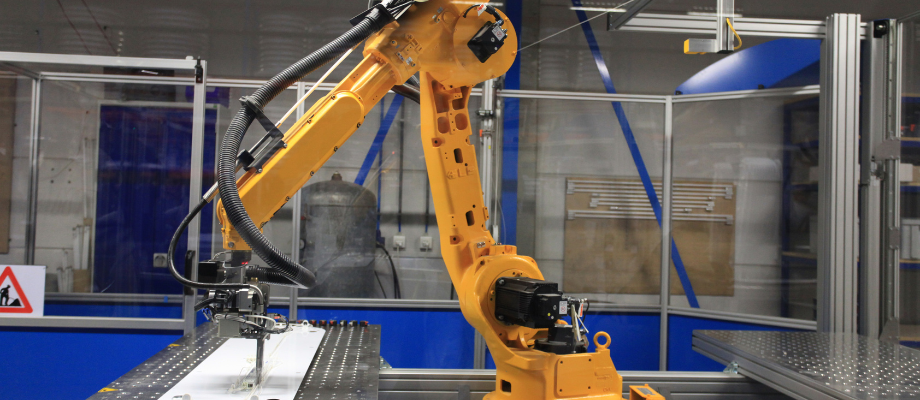
The automation engineer designs and sets up automated systems for industrial production, ensuring a fine balance between quality, safety, speed, energy consumed and operating costs.
Its role is not limited to programming a PLC or to creating an HMI (Human-Machine Interactions): it is responsible for the initial study of customer needs, the design of the system architecture, the integration of equipment (sensors, actuators, drives, drives, drives, industrial network, electrical boxes), supervision (SCADA/MES), on-site commissioning and the optimization of systems over the long term.
Indispensable in industries that are reinventing themselves with digital technology, the automation engineer is the bridge between the design office and the field teams. It transforms theory into measurable actions, structures methods, drives automation and secures service continuity. His mission? Improve the production chain, reduce hazards and increase the reliability of maintenance.
What are the missions of an automation engineer?
The automation engineer intervenes throughout the project cycle from functional analysis to post-start-up follow-up.
Upstream, he studies the needs and constraints of the industrial environment: volumes, product variability, quality requirements, cycle times, machine safety issues, integration into the site network and existing industrial IT.
He then designs the system architecture by choosing the appropriate equipment and technologies: adapted PLC, input/output modules, axis control, operator interfaces, supervision, communication protocols, communication protocols, electrical protections, and backup strategy.
Then comes the development: programming IEC 61131-3 (LD, FBD, ST, SFC) structured by a clear method (GRAFCET/SFC, state diagrams); implementation of the HMI with synoptics, alarms and historization; configuration of SCADA and connectors to MES/ERP to link the field to digital technology.
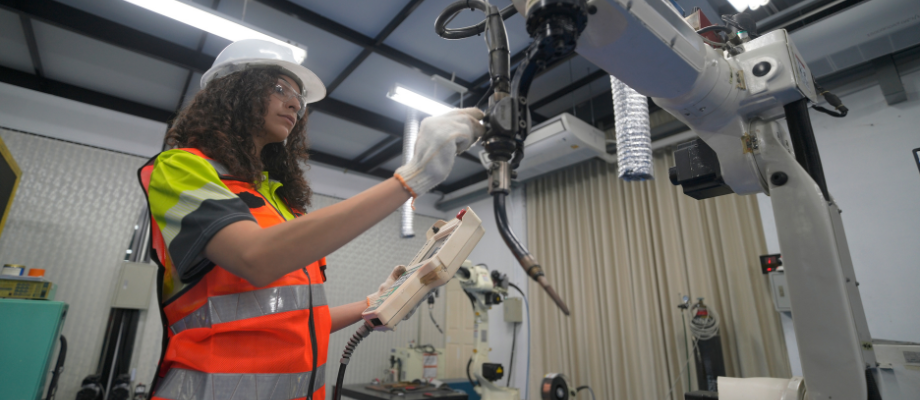
In the field, the automation engineer implements and integrates the whole system on line or machine: addressing, configuration, FAT/SAT tests, fine adjustments, operator training, drafting the commissioning sheet.
Finally, after start-up, it ensures the optimization of systems (OEE, MTBF/MTTR, energy consumption), first-level maintenance when necessary, incident analysis and continuous improvement, while ensuring technological monitoring to offer innovative and robust solutions.
Who are its main interlocutors?
On a daily basis, the automation engineer works in a project team with numerous interlocutors. He exchanges with the or the Project manager who manages planning, budget and milestones, but also with the electrical design engineer who develops diagrams, schedules and wiring plans, and with the methods that define operational standards.
He collaborates closely with the Automation Technician and the Maintenance Technician, whose field feedback is essential to stabilize the line and improve the availability of the equipment.
On the client side, he interacts with factory, production chain, quality and industrial IT managers, as well as with HSEs for safety issues. He must also communicate with machine and PLC suppliers, specialized integrators, and sometimes IT teams to secure OT/IT network links.
Its ability to integrate these multiple perspectives and to translate heterogeneous constraints into coherent solutions is a key factor in the success of the profession.

II - What are the skills and qualities required to do this job?
Technical skills
The first expected skill concerns PLC programming and equipment control. An automation engineer must be comfortable with the languages of the IEC 61131-3 standard (LD, FBD, ST, SFC), know how to structure sequential logic (GRAFCET/SFC), manage multi-axis movements, production recipes and degraded states, while integrating safety functions.
He must master supervision (SCADA) and the HMI: create readable synoptics, define relevant alarm thresholds, log critical data, generate quality and production reports, and connect everything to the information system via OPC UA or APIs. Electrical design is another pillar: reading and drawing up diagrams, sizing protections, choosing variators and actuators, wiring, regulatory compliance, electromagnetic compatibility.
On the industrial network part, knowledge of protocols (Profinet, Ethernet/IP, Ethernet/IP, Modbus, sometimes Profibus), subnetwork segmentation, redundancy and access management are necessary to ensure basic OT security and high availability. In addition, there is the ability to develop small tools (test scripts, gateways, data conversions), to exploit histories for detailed analysis and to define the right KPIs (OEE, MTTR/MTBF, scrap, kWh/lot) that will be used to optimize systems.
Soft Skills
The automation engineer must demonstrate a strong capacity for analysis, curiosity and a keen sense of method. His work leads him to make decisions in a constrained context, sometimes at a standstill, where every minute counts. Clear communication with operators, maintenance technicians, quality managers and project managers is essential to align the understanding of root causes and pilot action plans.
Autonomy on the field station must be accompanied by documentary discipline, because traceability (versions, parameters, changes) conditions the stability of systems and the ability to investigate. The automation engineer is also a pragmatic innovation professional: he must know how to propose measurable improvements, capitalize on gains, share best practices and ensure a regular technological watch on new technologies (vision, analytical AI for supervision, digital twin, collaborative robotics, OT cybersecurity). Technical English is frequently used for notices, supplier tickets, international FAT/SAT and inter-site exchanges.
III - How to become an automation engineer?
Recommended academic paths
The most common way to become an automation engineer is by obtaining an engineering degree or a master's degree specialized in automation, electrical engineering, robotics, industrial computing or systems engineering. During your school studies, it is strongly recommended to choose automation-oriented options such as PLC programming, electrical design, industrial network, supervision, vision and robotics basics.
Professional certifications
Even if they are not always required, some certifications can make a difference in the job market, especially those related to machine safety (EN ISO 13849, IEC 62061) or industrial supervision and communication technologies (OPC UA, industrial Ethernet protocols).
Certifications on specific PLC suites or on electrical CAD tools (EPLAN/SEE) validate operational competence. A basic module in OT cybersecurity (access management, backups, network segmentation) is increasingly popular, because the digital security of installations is becoming a major issue for any production site. These certification courses demonstrate a rigorous method and an ability to implement solutions that comply with standards.
IV - What are the prospects for developments? What remuneration?
Development perspectives
The prospects for the evolution of the automation engineer are numerous, because his field is located at the crossroads of engineering, industry and digital technology.
A first path consists in deepening your technical expertise: to become a reference in advanced PLC programming, SCADA/MES supervision and architecture, robotics and industrial vision, or OT/IT interconnection via modern protocols. This expert career can lead to system architecture functions, where standardized platforms are designed for several sites and lines, by controlling shared libraries and HMI templates.
A second path is project management: based on solid field experience, the automation engineer can take on the role of Project Manager, implement multi-site coordination, manage schedules, risks and budget, and lead a multidisciplinary project team.
A third path is management: design office manager, maintenance department manager, or leader of an innovation unit dedicated to system optimization and automation.
Finally, transversality offers other opportunities: industrial data, analytical AI for supervision, digital twin, OT cybersecurity, or even industrial computing with an emphasis on integration into the company's IS.
Remuneration
Many factors come into play (missions, sector, scope, scope, size of the company, location, atypical skills, etc.). To give an idea of remuneration, here are forks from Apec according to the following parameters: Automation engineer, Bac+5 (engineering school), consulting firm with 599 to 1,000 employees, Île-de-France in 2025.
- Junior (< 4 years of experience) : 37 to 46.6 million euros gross/year
- Confirmed (5—8 years old) : 38.7 to 50.8 million euros gross/year
- Senior (9—16 years) : 43.8 to 57.2 million euros gross/year
For a more accurate estimate, adapted to your profile and our missions, we invite you to consult our job offers.
Conclusion
Do you want a concrete job, at the heart of production? Automation engineering allows you to design, deploy, and optimize systems that really matter for industrial performance. From needs analysis to commissioning, you transform operational requirements into measurable results: more availability, fewer hazards, better quality. On a daily basis, you navigate between PLC (TIA Portal, Studio 5000, Codesys), SCADA/MES and OT/IT integration, driving continuous improvement on tangible indicators (OEE, MTBF/MTTR, energy consumption). The prospects for change are rapid and the sectors varied: automotive, agri-food, pharmaceutical, pharmaceutical, intralogistics, energy, microelectronics... Do you like the terrain, the method and the impact? You will see your decisions directly affect the performance of the lines. Ready for what's next? Discover our job offers and Apply in a few minutes.

Unsolicited application
Are there currently no offers that match your profile? Share your spontaneous application with us!

.png)
.png)