Hardware engineer
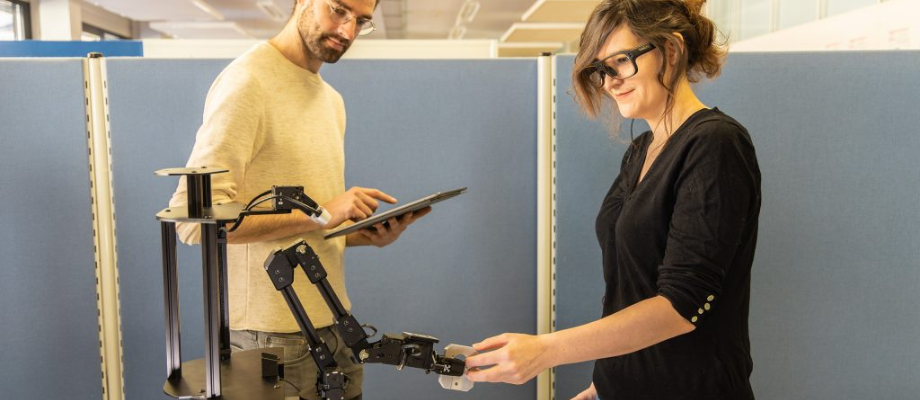

A smartphone, an industrial sensor, or a server cannot exist without someone to design the hardware that makes them work. Before the code, there is a circuit, a board, and a physical architecture capable of running it. This is the domain of the hardware engineer.
What is a hardware engineer?
Hardware refers to all the physical components of a computer system: processors, electronic boards, sensors, connectors, and power supplies. It is the counterpart to software, which consists of the programs executed on that hardware. A computer, a connected object, or a piece of industrial equipment always combines both: the hardware provides the physical support, and the software drives its operation.
The hardware engineer is therefore the specialist in designing this equipment. They work on the functional architecture of electronic systems, draw schematics, select components, design electronic boards, and verify that the whole assembly meets the project's technical constraints (power consumption, reliability, form factor, operating environment). Depending on the sector, this can range from a sensor embedded in a vehicle to a computing module for an industrial system.
The profession differs from that of a software developer by its object of work: while the latter writes code, the hardware engineer designs the equipment on which that code will run. The two worlds intersect regularly, particularly in embedded systems, where hardware and software are conceived together from the design phase.
What does a hardware engineer do? What are their daily tasks?
Hardware design and architecture
Work often begins with a needs analysis: what device is to be designed, in what environment will it operate, and what are the power or safety constraints? The hardware engineer translates these elements into a functional architecture, selects the appropriate components (analog, digital, or mixed), draws the electronic schematics, and designs the corresponding boards. On a multiprocessor system, this involves understanding the exchanges between the different blocks, not just each component in isolation.
This design work requires precise technical knowledge: analog and digital electronics, printed circuit boards, and safety standards specific to the sector. Proficiency in electronic CAD software is part of the job, as is a foundation in programming to communicate with the teams that will develop the firmware or embedded software.
Testing, validation, and industrialization
A designed board is only validated after a series of tests. The hardware engineer performs functional trials, verifies compliance with specifications, identifies defects, and adjusts the design accordingly. This phase takes time, sometimes more than the design itself, and requires methodical rigor: a defect detected late on a board that has already been industrialized is expensive to correct.
Depending on the project, the hardware engineer also oversees the transition to production: selecting subcontractors, performing quality control on initial batches, and making adjustments related to mass production constraints.
Teamwork and the link with software
The hardware engineer rarely works alone. On embedded projects, they are in constant communication with software teams, who develop on the hardware they have designed, as well as with project managers to arbitrate technical priorities. This proximity to development sometimes brings this profession closer to that of anembedded systems engineer, especially when the hardware and software scope overlap significantly.
At IT Link Group, Linkers in this role have the opportunity to work with a wide variety of clients: an automotive project does not impose the same constraints as an industrial or medical one. This diversity is a real opportunity to build skills. It allows you to test your methods against different specifications and encourages you to discover technologies that a fixed position in a single company would not always allow you to encounter. It is also an opportunity to advance your experience faster than by staying on a single type of project.

What skills are required?
The technical foundation is based on electronics: analog, digital, and mixed-signal, with a strong command of schematics and electronic board design. Electronic CAD software is part of your daily toolkit, as is knowledge of multiprocessor architectures or embedded systems. Programming skills, particularly in C or VHDL, are often required to communicate effectively with firmware development teams.
Certain sectors, particularly automotive or medical, require mastery of specific quality and safety standards: a hardware engineer who is already familiar with these has a clear advantage on these projects.
Beyond technical skills, the job requires methodical rigor and the ability to document your work precisely. A poorly documented schematic costs time for the entire team that has to work on it later. Communication with software teams also matters: a hardware engineer who clearly explains hardware constraints avoids many unnecessary back-and-forth cycles during the testing phase.
How do you become a hardware engineer? What should you study?
An engineering degree remains the most common path to this position, with a specialization in electronics, embedded systems, or microelectronics. A master's degree (Bac+5) from an engineering school or university, supplemented by an electronics-focused master's, opens up most positions in the sector. Some schools offer programs dedicated to electronic board design or multiprocessor systems, which is a valuable asset for starting on technical projects from the very first years.
Experience counts as much as the degree once you are in the role. A first project during an internship or work-study program, involving electronic components or embedded computer systems, gives you a head start for future recruitment. The field evolves quickly: companies expect candidates capable of keeping up with technological developments, without necessarily requiring mastery of every new technology at the time of hiring.
A career change is possible from a related technical background, such as electrotechnics or industrial computing, provided you strengthen your knowledge of electronics through additional training or field experience.
What is the salary of a hardware engineer?
The salary of a hardware engineer varies according to many factors (projects, sector, scope, company size, location, unique skills, etc.). To give you an idea of compensation, here are ranges from Apec based on the following parameters: Hardware Engineer (M/F), Master's degree (engineering school), consulting firm with 599 to 1,000 employees, Île-de-France in 2025.
- Junior (< 4 years of experience): €37k to €46.6k gross/year
- Experienced (6-8 years): €38.5k to €49.3k gross/year
- Senior (9-16 years): €43.8k to €57.2k gross/year
For a more precise estimate, tailored to your profile and our projects, we invite you to check our job openings.
The hardware engineering profession is for you if…
You enjoy understanding how things work physically, not just on a screen. When a circuit doesn't power up or a signal degrades on a board, you’d rather dig deeper than move on to something else.
You don't mind being thorough. Documenting a schematic, tracing a fault to its root cause, and revalidating a board after a fix: this methodical work is just as much a part of the job as the design itself.
Working at the intersection of hardware and software interests you more than a purely software-based role. You are comfortable collaborating with different teams and explaining technical constraints to those outside your field.
Finally, you aren't intimidated by regularly changing contexts and industries. In fact, that’s often what makes this career rewarding in the long run.
Does this sound like you? IT Link Group is hiring hardware engineers for clients in France, Benelux, Morocco, and Canada. Explore our job openings.

Unsolicited application
Are there currently no offers that match your profile? Share your spontaneous application with us!

.png)
.png)