What recruiters really look for on a resume
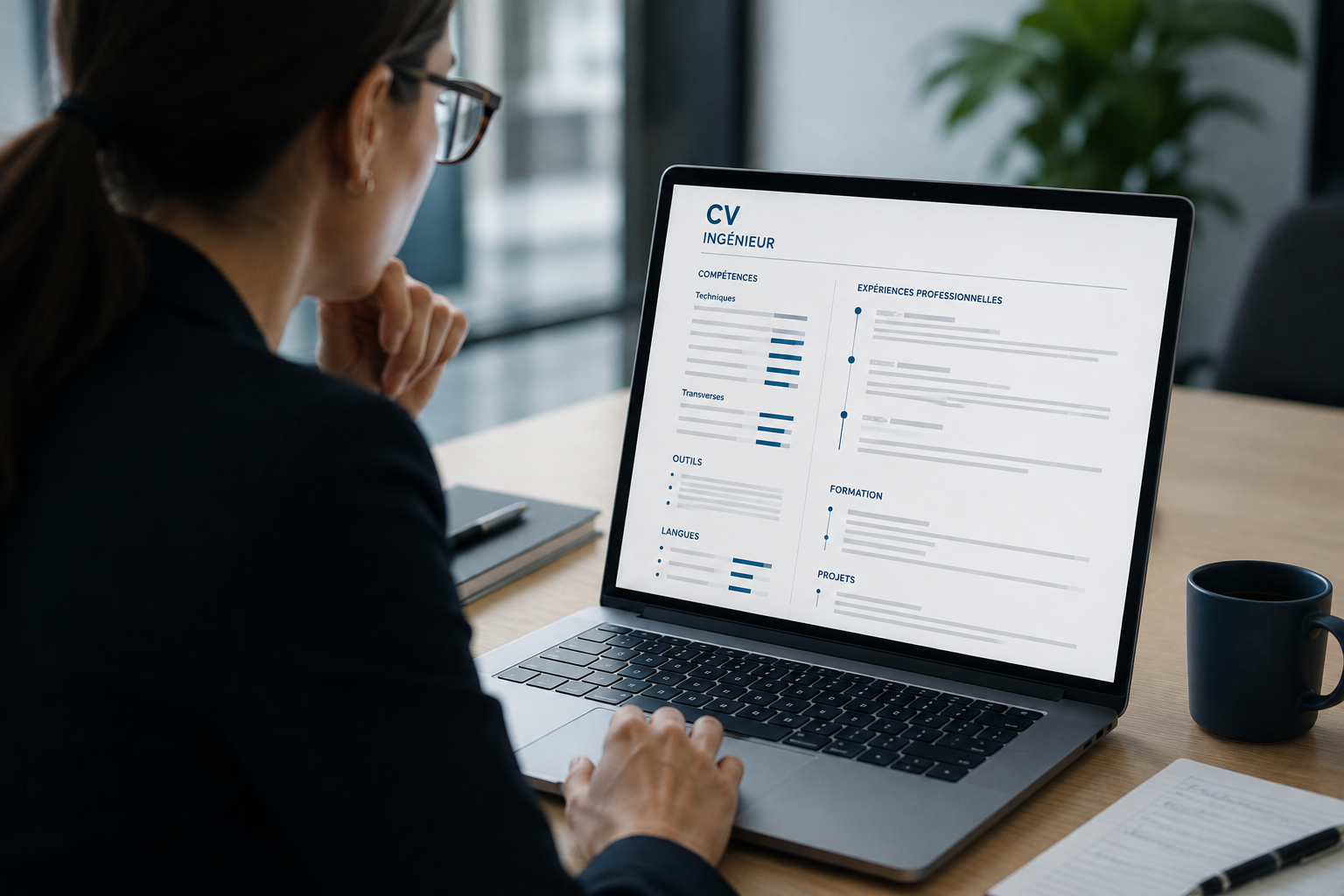

A resume alone won't land you a job. However, it can spark interest in learning more—or cause you to miss out on an opportunity despite having a relevant background. Every application tells a story: experiences, career choices, mastered technologies, assumed responsibilities, and sometimes even career changes. Yet, when writing a resume, it is easy to want to include everything for fear of leaving out something important.
The paradox is this: the more a resume tries to be exhaustive, the harder it can become to read.
We interviewed five recruiters from the IT Link Group to understand what catches their attention when they review an application.
A resume is scanned... before it is read
When a recruiter first looks at a resume, their primary goal is to quickly grasp the candidate's background. Certain pieces of information help them better understand the candidate's experience and professional environment.
Technical skills are naturally among the first things they look for. "Technologies, years of experience, level of responsibility, and English proficiency" are among the elements Nelly checks first when reviewing an application.
But a resume is more than just a list of skills. To understand a profile in its entirety, other elements can provide additional insight. Selma pays particular attention to education, while Caroline also looks at "the companies the person has worked for and their personal projects," which provide a more complete view of their career path.
Beyond the information provided on the resume, it is the overall coherence that allows the recruiter to better understand the candidate's experience.
An effective resume is, above all, a readable one
If there is one point that comes up in all our recruiters' responses, it is the importance of clarity.
A resume does not need to be particularly original or filled with graphic elements to be effective. What matters most is that the essential information—experiences, responsibilities, skills, and completed projects—is easy to identify.
For Caroline, the challenge is finding the right balance between precision and simplicity: you must "know how to both explain and summarize your experiences." The resume should make the recruiter want to learn more while allowing them to quickly understand the background presented.
This logic also applies to how you describe your experiences. A list of tasks is not always enough to showcase a project. A few lines providing context about the environment, the objectives, and the role held can make all the difference.
Selma recommends presenting experiences with a clear structure: a few elements of context, the technologies used, and the responsibilities associated with the position. This approach allows the reader to better understand the candidate's contribution.

Think about the person reading your resume
This is perhaps the most underrated piece of advice.
When you work at a company for several years, you eventually adopt its vocabulary, acronyms, and job titles. However, these references may not mean anything to someone who is just discovering your background.
Marion recommends using job titles that are understandable to everyone rather than company-specific terminology. This simple habit immediately makes the resume easier to read.
Thomas also emphasizes the importance of a structured presentation: experiences should be "clear, concise, and structured," with keywords that allow the recruiter to quickly identify the candidate's skills.
In other words, a good resume is not just a document that describes your background. It is a document designed for the person who will be reading it.
Common mistakes… and how to easily avoid them
In talking with our recruiters, another trend emerges: the most frequent mistakes are rarely related to your actual background, but are often issues with presentation.
Experience summarized by a simple job title. Missing dates. A layout that makes information hard to find. Or, conversely, a document so dense that the essential details get lost in the text.
Nelly also mentions a confusion she encounters regularly: some candidates submit a skills portfolio instead of a resume. While these two documents may seem similar, they serve different purposes. Your resume should remain a gateway to your career path, not an exhaustive inventory of every task you have ever performed.
Key takeaways
Through their insights, our recruiters reiterate a simple idea: a resume doesn't need to be spectacular to be effective.
Above all, it must allow someone to quickly understand your background, identify your skills, and feel interested in speaking with you.
Before sending your application, ask yourself one final question: if someone who knows neither your company nor your profession were to look at your resume, would they easily understand what you do today… and what you could bring to the table tomorrow?
If the answer is yes, then your resume is already fulfilling its mission: opening the door to a conversation!
Ready for your next challenge?
The IT Link Group is hiring for a variety of projects in France, the Benelux, Morocco, and Canada. Discover our job openings and take your career to new heights!
Unsolicited application
Are there currently no offers that match your profile? Share your spontaneous application with us!